|
||||
|

Saturday, May 25, 2013
Re Ralph Waldo Emerson



Thursday, May 23, 2013
Editing Essentials
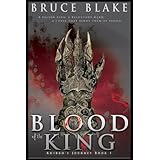
As a self-published author, I often find myself involved in discussions debating the benefits of self-publishing versus traditional publishing, both with readers and fellow authors.
I am the first to admit that both have
their pros and cons--which I won't get into here--but the two attractive
features of traditional publishing which are almost universally agreed upon are
distribution and perceived quality. It is the latter which provides the impetus
for this post.
The perception of quality in
traditionally published books comes from the editorial support provided by
publishing houses. Before anything goes to print, multiple editors have a go at
a manuscript, leading to multiple revisions, all supposedly to bring the best
manuscript to market (or perhaps the most likely to sell?).
What many indie authors miss is that they
can also bring this level to their work, but it has to start with the writers
themselves.
Even if you are investing thousands of
dollars with one of the best editors in the world, you still have to take a
look (a number of looks, really) at the work yourself before you email it away.
But how do you do that? You just wrote the thing, you know what happens, your
eyes are already tired of looking at it. How do you get some distance?
You're right, it's difficult. The answer
is not to simply sit down and start reading through, looking for errors--this
is exactly how you will miss things. The key is to have a process. That looks
different from one writer to the next, but here's mine:
1. Bad word edit.
In this stage, I have a list of words I
look for to get rid of my habitual 'go to' words, passive constructions, and
wishy-washiness. Most word processors and writing software (I use Power Writer) have
a 'find' or 'find & replace' function under the edit tab to make this
easier. Here is my list:
that, as (shows me both 'as' sentence
constructions and passive 'was'), were, just, try, tried, moment, turn, fro
(shows me 'from' when I meant 'out of'' and the like, as well as having people
standing in front of things too often and when my fingers screwed up 'for'),
form (I used to misstype 'from' frequently), could, had, almost, even, somehow,
something, barely, nearly, only (wishy-washy words), still, there, manage,
glance, feel/felt (not precise), would, like.
I look for all of these words in a
chapter before moving on to the next, reconstructing sentences and
reconfiguring wordings as I find them. I've been using this list for some time,
so I've come close to completely weeding some of them out of my writing (I
almost never use barely, barely ever use nearly, and nearly always remember to
leave out almost). It feels great when I run through a chapter and find a few
of the words either used sparingly or avoided all together.
Some writers might think it backward
doing such a close edit on the first pass, because we are often taught our
first edit should look at the big picture, taking into consideration
storylines, tone, character arcs and such. This type of edit actually gives you
that kind of view of your manuscript, because you end up looking at your book
one sentence at a time, skipping some and reading others, and not in order. You
will be surprised what you notice.
2. Editing software.
This is a new step in the process for
me...well, not really new, but different. I recently found on-line editing
software called ProWriting
Aid, and I love it. The way it works is easy--you paste your manuscript
into it (I usually do one chapter at a time), click 'analyze', and it spits out
a number of reports for you. They include:
overused words, variation of sentence
length, grammar (spelling, ending sentences with prepositions, etc.), writing style
(passive verbs, repeated sentence starts), sticky sentences (locating
unnecessary words in sentences), clichés (things that sound like clichés) and
redundancies (e.g.-enter into), repeated words and phrases (that occur within a
few sentences of each other), phrases summary (2 to 5 word phrases and how
often you use them), diction, vague and abstract words (feel is a vague word,
for example), complex words, alliteration analysis, consistency, time (to check
the timeline in your story), dialogue (tag frequency), and homonyms (make sure
you meant there, not their, or they're, or thar if you're writing about
pirates).
These are all things I try to be aware
of, but sometimes get missed (a recent word cloud showed me the most used word
in one chapter was bottle, so I ditched a bunch). Finding this software is the
best thing to happen to my writing in a while and will save me a considerable
amount of time, as well as allowing my editor to concentrate more on story.
The key to using this software is to
remember it is not assessing your story, simply the pattern of words.
I take notes during both of these steps,
noting either directly in the manuscript or in a notebook any new ideas,
inconsistencies, or story and character thoughts, so I have them at hand when I
get to step three.
3. The chapter read through.
My first read through is done chapter by
chapter when I am done step two (i.e.- do step two, completing all changes,
then do step three, then do step two in the following chapter, then step
three...lather, rinse, repeat). In this step, I look mainly at pacing, tone,
word choices and sentence structure. I also continue to take notes as in steps
one and two.
4. The full read through.
Start at the beginning, work through to
the end. My main concerns are story, character and consistency...the big
things.
5. Send it to the editor.
You have to have an editor. Let me repeat
that, in case you missed it...YOU HAVE TO HAVE AN EDITOR. Yes, this will cost
you money, so start putting aside your pennies now. DO NOT be one of those
indie authors who cuts corners and gives self-publishing a bad name, you hurt
all of us when you do.
6. Returned from editor.
Make necessary changes.
7. Proofreaders/Beta readers
Have some people who like to read, know
how to spell, and know what commas are, because something always gets missed.
Have as many readers as you can, then don't be surprised when a missed word
slips through everybody to be mentioned by the first person who reviews your
book. Every published book--self or traditional--has at least one mistake.
Electronic, self-published books have the advantage of being able to upload a
new, corrected version.
Here's the thing you really need to know
about editing...it has to be done no matter whether you choose self-publishing
or traditional publishing. If you are an indie, good quality editing leads to
better sales and reviews. If you go with traditional publishing, agents and
publishers expect your best possible effort for their consideration--don't miss
out on a publishing contract because you don't like editing.
Learn to love editing and sell more
books.
(PS - I am in no way associated with
ProWriting Aid. I discovered it on a forum and have been thankful for its
mention ever since. There are other, similar tools available and I encourage
you to do your own research)
Bruce Blake
Bruce Blake
Author of:
Tuesday, May 21, 2013
Q&A with writer Suellen Zima
 |
| Suellen Zima |
Suellen Zima is a writer and blogger in Southern California. She is the author of Memoirs of a Middle-aged Hummingbird, and the forthcoming Out of Step: A Diary to My Dead Son.
Q: Why did you decide to write a diary to your late son, and how would you describe the relationship between you?
A:
My son died in 2003. As Mother's Day approached in 2011, I had a
strong feeling that he was just too dead. I needed to try to do
something to make him come more alive to me. I had half-heartedly,
unsuccessfully tried a few times to write something about him, but that
had gone nowhere.
So,
I thought, "Why not write a diary to him and see what happens?" I had
no plot, didn't know if anything would come of it, or where it might
lead, if anywhere. There were a lot of pieces to our mother-son
relationship that were unsaid and unfinished. We both had felt
abandoned by the other after [my] divorce. Although I always knew
something about him from his dad, there had been long gaps where he had
refused any contact with me.
When being HIV-positive
turned into AIDS, he knew his time was limited. It was then he started
calling me again, and visited me once. He died two years later, a
month before his 35th birthday. Interracial adoption in the 1970s,
divorce when he was 12, guilt and abandonment, homosexuality, HIV-AIDS,
dying and grieving were all parts of our complicated mother-son
relationship.
Q: How did writing the diary affect you?
A: I wrote in the diary frequently until Mother's Day of 2012. Sometimes I talked to him as I would if he were alive, telling him about up-to-date news I thought would interest him. I discussed interesting aspects of books I was reading. I told him about my life after the divorce that he hadn't wanted to hear about. I attempted to understand him better, both as the child he had been, and as the adult I barely knew. And I wanted him to know me as the person I was now.
Slowly,
subtly, I felt a shift in my emotions. I purposely became more
optimistic. My anger and guilt became muted as I endeavored to talk to
my son. I enjoyed our communication and felt more connected to him than I
had in years. He popped into my mind often, reminding me of things I
wanted to tell him in the diary.

Q: Your previous book, Memoirs of a Middle-aged Hummingbird, followed your travels around the world, particularly to China. What about China kept drawing you back?
A: I first went to China in 1988 out of sheer curiosity. I knew nothing about China. I didn't know any Chinese people. And no one was talking much about China at that time. My first fascination with China was, I suppose, the third-world time machine effect. I knew I wanted to get to know the people, and I chose teaching as my tool to learn the culture from the inside.
At
that time, the students were an intriguing mixture of both innocence
and depth, with incredible motivation for learning English. They not
only respected their teachers, but treated them as people they wanted to
know better. They took me places and invited me to visit their
families. Because I nurtured the relationships and visited often over
the years, my students became my friends.
We
are still in contact. Now I am a senior, and they are middle-aged. Six
of them asked me to be the foreign grandmother to their children, and
this has been a continuing joy in my life.

Q: Do you see links between your two books, and if so, how are the themes you explore in both books connected?
A: Out of Step: A Diary To My Dead Son is really a prequel and a sequel to Memoirs of a Middle-aged Hummingbird.
Because my son chose not to travel with me after the divorce, our
communication in a time before the ease of computers, e-mail, and long
distance phone calls was limited. Since he felt I had abandoned him by
choosing my life abroad, he didn't want much contact.
So, the years covered in Memoirs of a Middle-aged Hummingbird
did not include him. His rejection, plus my guilt for choosing to
divorce, made it too painful for me to write about him. However, in the
diary, I filled in the gaps of those years without much
contact, continued the relationship after he re-connected to me two
years before he died, and covered the years since his death in 2003.
The two books offer very different perspectives on the roads I have traveled in my life.
Q: Are you planning to write another book?
A: While the seed of writing a book about the times and cultures I explored through my travels was in my mind for a while, the idea to try writing a diary arose unexpectedly from the nagging thought that my son was too dead.
When
I had tried writing about him, I realized I didn't really know enough
about him after the age of 12 to write about him. Besides, I craved a
form of writing that would re-start some form of communication. The
diary emerged spontaneously and I continued to write in it frequently
over the next year.
After I ended the diary as a book, I missed the communication with my son. So, I have continued to write him e-mails. I don't know at this point whether those e-mails will one day become a book. I surprised myself by publishing one book. There is also a Chinese translation of my first book on an online website in China. And now Out of Step: A Diary To My Dead Son will be available to all. Because I am sure I won't stop writing, I know that I will continue my blog (www.zimatravels.com/wordpress). It's quite possible another book will emerge eventually.
After I ended the diary as a book, I missed the communication with my son. So, I have continued to write him e-mails. I don't know at this point whether those e-mails will one day become a book. I surprised myself by publishing one book. There is also a Chinese translation of my first book on an online website in China. And now Out of Step: A Diary To My Dead Son will be available to all. Because I am sure I won't stop writing, I know that I will continue my blog (www.zimatravels.com/wordpress). It's quite possible another book will emerge eventually.
--Interview with Deborah Kalb
Visit http://www.zimatravels.com and Follow the Senior Hummingbird as she wanders, wonders, and writes. Sunday, May 19, 2013
How I Fought the Amazon Wars and Won
.jpg)
I have been published by a big publisher. It
was called "Harcourt-Brace," and it was the small professional arm of
the corporation, "AP Professional Press" that published my book, The
Digital Scribe: A Writer's Guide to Electronic Media. Notice the
quaint reference to "electronic media." Back in the late nineties, we
were still bedazzled by the newness of digital technology and its
"multimedia" aspect. Today, digital multimedia is part and parcel of
most of the "packaged novels" that get submitted by the big agents
out there. They've already looked ahead to all the money to be made on movies,
computer games, translations, Chinese edited versions, ads on the walls of
urinals, and on and on with the corporate merchandising aspect of business.
This was 1996, so publishing had yet to go through the gigantic and tumultuous
war with the Amazons (coming soon to a screen near you!), and I was too much of
a rookie to see the writing on the Amazon wall, so to speak. Amazon,
after all, was also a "big corporation."
Flash forward to 2013, and I am completely
entrenched in the "indie publishing movement." Yes, I am politicizing
this because there is a grassroots "political" movement going on that
dares to stand-up to the big publishing giants and call them on their intrigues
and misrepresentations. I wrote a "little mystery" that I was proud to
say was a "big publisher's worst nightmare." Why? First of all, it
was short (114 pages in paperback, 12 pt. font); it was not padded with
description and useless back story; it was, in short, the best short mystery I
had ever written, and it was meant to grab the readers' interest and keep them
entertained for the entire 114 real pages and 2415 Kindle pages. I used the
simple and straightforward distribution method of Amazon's (there's that creepy
name again) Kindle Direct Publishing (KDP). This method allowed me (ME, ME,
ME, a thousand times ME) to control all of the content, all of the revisions,
all of the covers, all of the entire blasted book! Oh my God! It was if I had
been re-born! I now had a direct line to my reader! No longer would I have to
haggle with an editor about using a drawing of a male monk in the Middle Ages
on my book's cover because, she said, "Eighty percent of readers are
female, and they would not want to see a male monk." But, I argued,
monks were male in the Middle Ages! Anyway, I had to
"compromise" and use the "hands of the monk" holding a
feather pen! With KDP and those lovely Amazon ladies, I was able to make all of
these big, "executive decisions" about my own book! What power! All
of that concentrated energy infused my body! (Or perhaps too much
caffeine?)
Of course, I must give a spoiler alert to all
you would-be indie pubbers out there. Unless you know what goes into a really
good story, and you've consulted with other indie authors about how to set-up
your book, you had better stay away from the wild forest where the Amazons
roam. They will capture you, possibly castrate or dismember you, and put you in
a pot for Mah Jong hors d'oeuvres later that day. Suffice it to say, get
somebody to "have your back" when you go down the indie road into the
dark Amazon forest of KDP or even the seemingly "friendlier" places
where they Smash Words or read together with Sluggo and Little Lulu. I suggest
you check-out places like Indies Unlimited. They have some crusty old
buggers who have been down many of the self-publishing roads, and they are
really friendly to newbies! Don't, under any circumstances, fall for the scams
out there! You thought Amazons were tough? You haven't experienced anything
until you've been raped by Author
Solutions and its vast
minions of corporate goons!
Okay, where was I? Oh yeah, me (my
favorite topic). So I wrote this tiny little mystery that began to
receive some favorable reviews on Amazon (up to 11 so far) from my readers.
These weren't reviews from some paid author who publishes his books at
the same big publisher as I do, or some "computer harvested mass of
reviewers" who are paid by big publishers to receive some other
"reward." No, these were actual readers of the book (the best
kind for reviews, by the way). I know they are the best kind because I
have been hoodwinked by so-called "professional" reviewers who never
read my book. In fact, my favorite short story is "Bullet in the Brain" by Tobias Wolff. In this story,
the protagonist, Enders, is a professional book reviewer of this ilk, and he
receives his just desserts!
The final bullet in my brain came from my hero
detective author, Lawrence Block. He was saying how he
recommended all would-be mystery writers to become independent if they want to
bypass the "screwing over" that was becoming the norm in big
publishing. This is a gentleman who could practically "name his
advance" in the detective mystery genre, so when he barked I sat up.
Are there independent author success stories?
I'll let you be the
judge. This ain't a war for nothin', ya know!

Jim Musgrave is an author, English Professor and business owner who lives in San Diego, CA. His most recent historical mystery series features Detective Pat O’Malley in Forevermore.
Friday, May 17, 2013
Home

Home. A simple word; a loaded one. You can say it in a whisper; you can say it in a cry. Expressed in the voices of father and daughter, you can hear a visceral longing for an ideal place, a place never to be found again.
Imagine the shock, imagine the sadness when a daughter discovers her father’s work, the poetry he had never shared with anyone during the last two decades of his life. Six years after that moment of discovery, which happened in her childhood home while mourning for his passing, Uvi Poznansky presents a tender tribute: a collection of poems and prose, half of which is written by her, and half—by her father, the author, poet and artist Zeev Kachel. She has been translating his poems for nearly a year, with careful attention to rhyme and rhythm, in an effort to remain faithful to the spirit of his words.
Zeev’s writing is always autobiographical in nature; you can view it as an ongoing diary of his life. Uvi’s writing is rarely so, especially when it comes to her prose. She is a storyteller who delights in conjuring up various figments of her imagination, and fleshing them out on paper. She sees herself chasing her characters with a pen, in an attempt to see the world from their point of view, and to capture their voices. But in some of her poems, she offers you a rare glimpse into her most guarded, intensely private moments, yearning for Home.
Uvi Poznansky

http://uviart.blogspot.com
http://www.facebook.com/uviart
https://twitter.com/UviPoznansky
http://www.amazon.com/Uvi-Poznansky/e/B006WW4ZFG/
http://www.goodreads.com/author/show/5758946.Uvi_Poznansky
Wednesday, May 15, 2013
Tomb Of The Unknown Writer
For the last several weeks, I have struggled to finish reading a
book. This is a book written by someone I call a friend. A face book friend -
true enough, but we have supported and encouraged each other and though I have
never met this person, I consider him a friend. I was really looking
forward to reading his book. The book, so far is receiving high accolades from
reviewers on at least two continents. Imagine my disappointment, when
after more than a month I was only on page 87. I could not finish reading this
book...No - I refuse to continue to read this book. This book is dead!
What is it about books that cause a reader to lose interest, or
stop reading? I don't know. I suppose that is an individual's taste and is
different for everyone. For me, I can muscle through most stories. The truth is
I enjoy reading, so if the story is good, and the characters are believable,
I'm good. With my friend's book, the story line was excellent. The way he was
developing his characters - superb. So why did I stop? There were too
many of these: anywho-be-doo, hunky-doubly dory, loopy-doo, doggy
doo- doo, lazy-daisy and more. On top of which there were numerous cliché, and
the syntax of the cliché left me with mixed messages. It was British...it was
American...it was cowboy...it was rural, poor Ohio. For me, it was confusing.
The combination of all of the above made this book, for me
impossible to read. I was so distracted, I could not move forward. But that was
me, and as I said before, it is highly individual. It is different for
everyone.
You will probably never read a review I write that smashes
another writer's work. I believe that writers, novice to master deserve credit
for making the journey, and writing a story for others to enjoy. The fact that
they spend months, or years writing their story for my entertainment or
education is good enough for me. Still, there are books out there that for one reason
or another are difficult for some of us to read.
I wish I could have ignored the distractions in this book, and
enjoyed the ride his character was clearly prepared to provide. It was a great
story line. For much of the first 87 pages, the writing was flawless.
So the question I throw out to the universe this morning is
this: How many cliché is too many? How many - I do not even know what to call
them..."any who" types of words and phrases can a manuscript have
before those words and phrases become intrusive to the story?
Oh! I don’t have the answers. Just the questions. I think I will
leave the answering of the questions to you.
Have a regular week every one.
I figured if I said "great week", I would be raising the bar
too high, and setting us all up for failure!

Brian M. Hayden
first published March 21, 2013 on my blog
Subscribe to:
Posts (Atom)